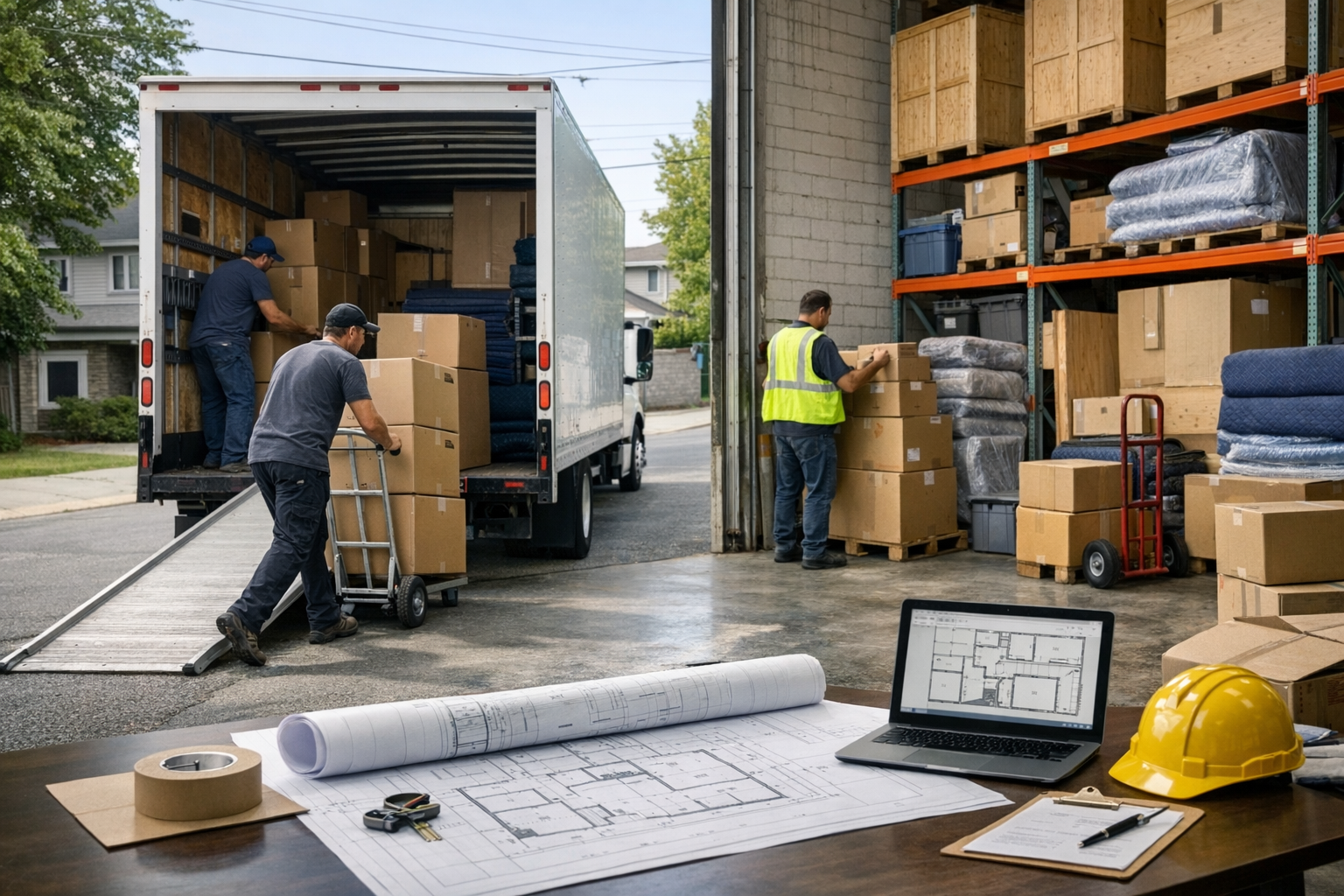
Why planning matters
A move gets harder when dates do not line up cleanly. Storage can solve that gap, but only if access, timing, and packing are planned in the right order.
A rushed plan often leads to double handling, extra truck time, and items buried where you cannot reach them. Good logistics reduce delays and make move day less chaotic.
Using storage during a gap between move-out and move-in dates
If your old place closes before the new one is ready, storage becomes a timing tool, not just extra space. The key issue is how long the gap will last, because a three-day hold needs a different setup than a three-week hold.
A common mistake is packing everything the same way. Items you need right away, like bedding, chargers, and work supplies, should stay separate. If they go deep into the unit, you will waste time reopening stacks and moving boxes twice.
Short gaps also create access risks. Some facilities have limited gate hours, and that can break your schedule if your movers arrive late or your truck return window is tight.
Coordinating movers, truck rentals, and storage unit access
The hardest part is not the loading itself. It is aligning pickup times, elevator access, unit hours, and the labor window you are paying for.
If one piece slips, the rest gets expensive fast. A truck that arrives before the unit opens can leave a crew standing idle. A moving team that finishes after gate cutoff may force an extra day of rental and another round of handling.
Confirm these details before move day:
- The exact access hours for the storage facility
- Truck size limits, loading dock rules, and parking restrictions
- Whether movers will place items by section inside the unit
It also helps to assign one person to manage calls and timing updates. Too many decision makers usually slow things down when something changes.
Temporary storage for downsizing before relocating
Before loading, build a simple keep, relocate, and reconsider system. A practical storage checklist can help you separate fragile items, priority boxes, and pieces that should stay accessible during the transition.
Downsizing adds a sorting problem before the move even begins. Storage can buy you time, but it should not become a holding zone for items you have not decided on.
The real tradeoff is space cost versus decision delay. A larger unit may feel safer at first, but it often encourages weak sorting and makes final unpacking harder. A smaller unit forces better choices, but only if you measure furniture and leave enough aisle space.
Combining moving services with storage for a smoother transition
Using one company for both moving and storage can reduce handoffs. Fewer handoffs usually mean fewer chances for lost labels, broken inventory flow, or disputes about when damage happened.
That said, bundled service is not always the best choice. The main limitation is flexibility. If your closing date shifts or you need partial delivery, some providers handle changes well, while others charge heavily for every adjustment.
Unit layout matters more than most people expect. If the front fills with random boxes, retrieval turns into a full unload, even for one small item.
How to stage items inside the unit for fast unloading and retrieval
Get the sequence in writing before you book. A clear moving plan should show pickup day, storage intake, access rules, redelivery timing, and who is responsible if dates move.
Place heavy furniture and long-term items at the back first. Keep daily needs, important documents, and open-first boxes near the front. Leave a narrow center path so you can reach the back without shifting stacks.
Label by zone, not just by room. “Front right, open first” is more useful than “bedroom.” That small change speeds up unloading and prevents fragile boxes from getting trapped under heavier loads.
Before the truck doors close, take a few photos of the finished layout. Those photos can save an hour of searching when you need one item before the final move-in.